29 October 2006

An outstanding book about insects by Bert Brunet


Australian Insects: A Natural History is an outstanding book by one of the greats in the history of great naturalists: Bert Brunet. This is not another coffee table picturebook with no real heart, but an exceptional production. The well-written, informative text (about much more than particular insects' lives) exudes patient observation, insatiable curiosity, and a wish to share the joy of discovery, even to the point of giving photography advice. The layout is clean and easy to access. The choice of insects shown is a pleasure whether they are newcomers to your greymatter bank, or already favourites such as the wattle-pig weevil is to me, and the breathtakingly beautiful greengrocer cicada is to many.

Although the cover photo is not by Bert Brunet, every one of the best pictures in this extraordinary book is. The key to the portraits' quality is his philosophy that one should see them alive, in their environment, doing what they do. Hoo-bloody-ray!

For an example, a female mottled cup moth (Doratifera vulnerans) is shown, freshly emerged from its artpiece of a cocoon (and the moth looks rather Louis xiv-ishly hirsute) across the page from a jawstretcher of a caterpillar of same, captioned in part: "The brightly coloured larva resembles a sea anemone, and is armed with expansible tufts of sharp stinging spines (setae), which the caterpillar is not shy to use if handled. These give a painful sting to the assailant."
His caterpillars pictures alone are worth the price of the book, if you only want to gawk.

Australian Insects: A Natural History by Bert Brunet gets my highest-level recommendation, no matter where you live or how young or old, ignorant or knowledgeable you are. (And no, I don't know Bert Brunet or anyone associated with this book.)

Two listings that I found for it:

Australia: The Map Market

UK: NHBS Environment Bookstore

Finally, I was very pleased to see that The Insectarium of Victoria library lists this book just above another of my favourites: Life Stories of Australian Insects by Mabel N. Brewster, Agnes A. Brewster, and Naomi Crouch, published in 1946, for schoolchildren—and school might be worth going to if . . . (but that is another subject).

Scented Fire

He rang his mother
from another continent and
reported that he had married the girl he'd been telling her all about.

And his mother
gathered his things
(only a little mouse-eaten)
from his shrine of a room . . .
his cricket bat,
his sectioned plans of robot elephants and biomechanical hands,
his sport awards and academic commendations and
outgrown shoes,
his tiny (though boggly on him then) first pair of spectacles . . .
And she found every picture of him from
his auspicious first day, on:
and burnt them
praying for the dead.

And when the money
he sent home the next week
was more than it had ever been before
his mother found it impossible not
to ask, when he rang as always
on the first day of the month:
"You have another job?"

"No," he chuckled,
and chucked Emily in
the ribs, and they giggled
through their faces
but not their mouths
while he explained:
"It was Emily"
(such a strange and ugly name)
"who made me do it."

And when,
the next year,
he and Emily
returned to his family home,
the smells of too much food
ran out to the street to greet them.

And soon the room of Emily's husband
rustled with the sound of mice, but
it was just a man and his wife
missing his childhood.

25 October 2006

Consider the quince in hot weather


Quince trees are so generous that every year I throw many fruits into the freezer whole, which means exactly that—no fussy stuff.

Continuing with Nothing Fussy:
The other day I pulled out enough quinces to cover the bottom of a big pot, let them thaw in it, covered them with water and simmered till they were quite tender, then let them sit in the pot for two days in the fridge. The liquor is thick and delicious, more refreshing than, but otherwise like an unfiltered apple juice.

You might wonder how much sugar to use. My personal answer is: 0. Freezing quinces makes them taste sweeter when they are defrosted; and when you don't add sugar, you can taste the quince as quince much more than you can when you add sweeteners. I'm not anti-sweeteners, by the way, and love eating good preserves straight from a glass, or with a piece of cheese.

But back to these quinces. They are good cold or at room temperature, but I refroze some of these stewed quinces with their liquor for the next hot day, which was only days ago. Eating them half frozen, and drinking that cold cold liquor made me almost long for the next hot day.

To really bring out their sweetness, a squeeze of fresh lemon is superb (to my taste, that is).

23 October 2006

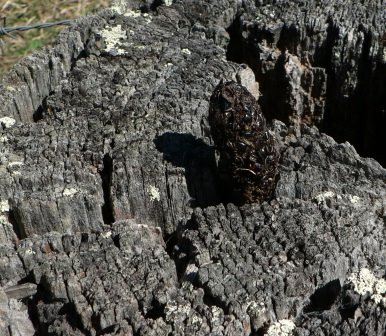
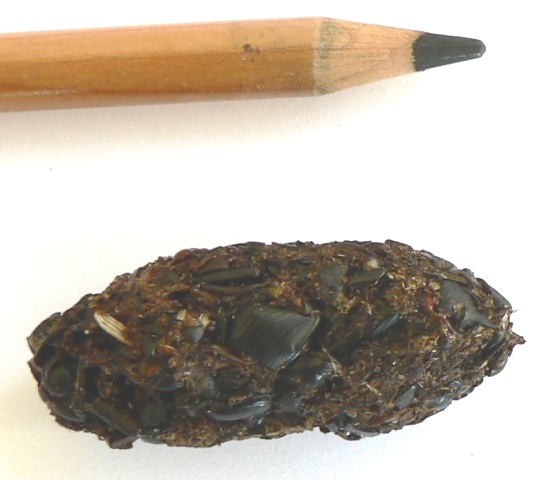
A pellet of dung beetles

Spring!

The paddocks are holey with the work of dung beetles,
thus the paddocks are walked by black and white magpies whose songs are ethereal but whose great bills are pointed toward the earth.

So . . . furthermorely thus and aftermore, the Dung Beetle takes another turn in the cycle of recycling, emerging glittering as ever atop this fencepost


as a magpie's regurgitation pellet.
The pellet was removed temporarily,

then placed back where it was found.

The next day it was lost to these prying eyes.

The pellet was the size and shine of a mulberry, and smelt of magpie.

(I rather think that if a magpie wrote [noting that they would not all write in the same style any more than we do, but still . . .] the style would be florid, charming, intelligent and untrustworthy; but a dung beetle's prose would be clean, simple and as true as a great haiku.)

Leslie Cannold, observer and thinker

Two important essays:

There Shouldn't Be One Law for Religions, Another For The Rest

Multiculturalism and Feminism: Do They Mix?

21 October 2006

The beauty of natural invention

A competition to celebrate: (with a gallery and place for comments).

"New Scientist has teamed up with Canon to search for the photo that best reveals the beauty of natural or human invention."

In the spirit of contemplation rather than competition, here are some inventions that have awed me, and could have inspired many of more brainpower.


The Arch


Weaving


The Space Capsule

16 October 2006

Frankenstein, Bulwer-Lytton, and the unsheathed pen

There is nothing that Australians can't do worse than the rest of the world, brags Frankenstein, aka Dylan Welch, in The Sydney Morning Herald.

So began his challenge:

The inaugural Rip-Off-of The Bulwer-Lytton

And Australia did us fair.

Have a giggle, yet . . . with an anxiety that almost amounted to agony, the Good Doctor himself related that . . . (My heart pounds! I would die rather than spoil his telling with my retelling) 'warning' . . . 'continue' . . . 'undaunted' . . . (oh, Doctor!)

13 October 2006

Martin Amis, observer and thinker

"It has been Martin Amis month in Britain," writes James Button, who then proceeds to spread the pleasure to Australians with a half-page spread in the Sydney Morning Herald, for "The British author Martin Amis has a particular slant on the motives behind the September 11 hijackings."

Into the head of a terrorist reads the headline, and the caption to the photo leads with Searching for insight.

Button writes:

His Atta, while flying on a Spanish airline in 1999, saw 15 or 16 white-robed, turbaned men suddenly crowd into the aisle and get to the floor, "humped in prayer". Over the intercom the captain ordered them to return to their seats or he would return to Dubai.

A stewardess appeared - tall, long-necked, beautiful: "swinishly luxurious". The effect on Atta is electric. He watches her bellow at the prostrate men: "Vamos, arriba, c----!" Let's go, get up, she orders, cursing them with a word for female genitals. Atta "would never forget the face of the stewardess . . . and how much he wanted to hurt it."

"It is an improbable scene," writes Button, who then goes on to try to analyse the reason for Amis putting it in, coming up with Atta's hate for women as described by Amis. Of course!

So why did Button say the scene is improbable? Sure it was over the top for her to say "Vamos, arriba!" But the scene was redeemed with "c---!"

Actually, this use of c--- is an issue that should be addressed, so I'm pleased that Amis brought it up. Just say "Mucho gracias" to a Spanish stewardess when she hands you your nuts, and she'll spit out "Cunt!" (woops. I forgot the dashes, but at least I haven't printed what Swedish stewardesses say).

All the women I know say cunt! to insult a man. We use it as this stewardess did, because you see, we hate women, or do we hate men? I forget, but I'm sure Amis (who's thinking a lot about women these days) would know. He's probably in our heads already, searching.

But back to the point of his searching, this "ambition" to get into the head of a terrorist, not just the words of an everyday person, as I think the stewardess would be classified.

All that observation, that depth of understanding necessary. All that leaping out of one's own ruts to insight away. It could be considered a conceit if he weren't "one of the world's finest living writers".