27 November 2006

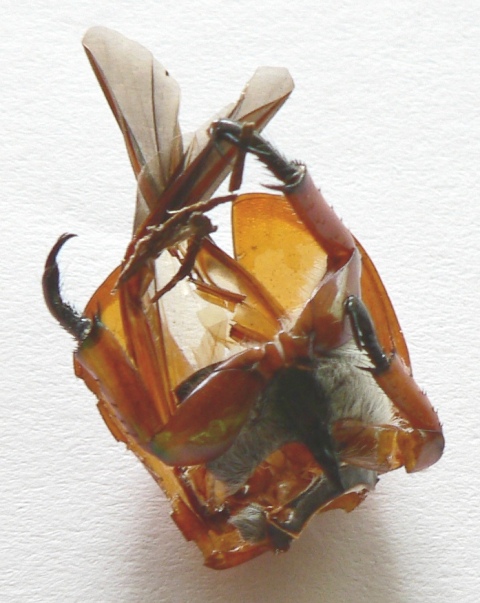
Remains of a Christmas beetle

This is the time of year when, if you see a jewel, it's likely to be a beetle, or what's left of one.There is a great richness of beetles here in southeast Australia, and many emerge now.

This scarab is a type of Christmas beetle (Anoplognathus) of which there are so many species in New South Wales that Chris Reid and Kindi Smith, of the Centre for Biodiversity and Conservation Research, Australian Museum, Sydney have produced an illustrated guide.

Ants do a marvellous job eating out the soft flesh of insects.

23 November 2006

Books in Russia: A true story by a friend I'll call 'Ж'

Independent writing and publishing is under threat in modern Russia. The government regularly publishes a list of 'banned books' which are not to be sold in bookshops. Though legitimately published, these books are now in the strange position of being circulated like the samizdat books of the Soviet era (and subsequent editions must presumably be printed in the old basement style.)

Ostensible criteria for the banned list are: books which 'promote' drug use, books which directly criticise the present government, and (ironically) books which criticise the Christian church.

The publisher of William Burroughs' 'Junky', Hunter S Thompson's 'Fear & Loathing' and Tony White's 'Satan Satan Satan' (all banned) has suffered at the hands of the Russian government, waking up one morning to find his bed surrounded by police, and awaking shortly after that in a mental hospital — this was a mere 'warning' (he was released after two weeks by an annoyed doctor, who found he was healthy and was baffled as to why he was there). The publisher was also locked out of his bank account.

While in some Western countries the police are seen as a state-sponsored street gang, in Russia the government hire actual street gangs to carry out some of their work for the purpose of deniability: this year the offices of T-ough Press were fire-bombed and a year ago two independent bookstores underwent a similar attack. In many ways the government has changed only in name and the system continues much as before, using many of the same techniques.

Some new methods have been imported from the capitalist West, however. While the Soviet government claimed to have eliminated class but only eliminated the middle one, the vast gap between haves and have-nots is now a matter of money as well as influence. The uncategorized mish-mash of 'modern' and Soviet-style manipulation in Russia is hard for western commentators to get their heads around and requires too much 'backstory' to describe, and so most western media simply ignores it (until someone known to the West is assassinated, and still the story is not adequately explained).

There was more coverage of Russia when the original Iron Curtain existed, because criticism could be used for political ends. Now the Russian leadership is a 'friend' and his methods too similar to those of Western countries to make criticism of it a comfortable experience.

10 November 2006

Dung beetle ambulating on a piece of paper


An extremely reluctant model, who just wanted to rush off. Built to dig in, the dung beetle found paper quite unsatisfactory. This allows you to see contrast, so I heartlessly frustrated its racing till I got one sort of satisfactory shot. After the session, a nice pat was found for it, and in just a few movements, it disappeared.

06 November 2006

Dear Associate Director, Fulfilment,

I do 'rely', as you say, on your magazine for some things, but I never expected Fulfilment! When does it begin? I have, as you should know, been a subscriber for some time, and have not received Fulfilment yet, even with your bumper issue.

I don't doubt your 'Sincerely', but you state categorically: 'The time will never be better.' By whose authority, when, and for whom? I saw a stone inscribed with these very words in Tutankhamen's tomb, and what did he get?

Not to say I don't trust you, but please have the Fulfilment Director write to me, if he writes. Or he could just Make Himself Known.

Better yet, just send me a 3-wish lamp. Your firm must have a warehouse full of them. At the stroke of my third wish's Fulfilment, you can consider your offer Accepted.


PS A friend who Reads Over My Shoulder has just interrupted, saying that Fulfilment doesn't mean you fulfilling my wishes, but me fulfilling yours. If that's true, this is a special offer indeed, if you think I should pay you for the privilege. If, however, you wish to query my rates:
1) I am not that kind of woman, not without a picture of you, a list of your skills, and your cooking creds, to begin with.
and
2) no apologies, but I don't discount.

So this aspersion can't be true. Nosey friends have suspicious minds. I look forward to saying hah! to her, having rubbed my lamp with Complete Satisfaction. You wouldn't simply want me to renew a subscription. btw, I enjoyed your magazine's favourable report of Professor Daniel Oppenheimer's 2006 Ig Nobel Literature Prize for "Consequences of Erudite Vernacular Utilized Irrespective of Necessity: Problems with Using Long words Needlessly"

04 November 2006

November VIRTUOUS MEDLAR CIRCLE features Steve Aylett

I don't usually use the 'm' word. But aylett's deceptive 'm' (and possibly 'm's) made me do it.

In The Virtuous Medlar Circle you'll also find the latest delicious column by A.C.E. Bauer (which changed my cooking plans) . . . and then, going down:
More Irresistibles (links) including:

  • The Coup de Grâce, Alistair Rennie's latest short story
  • a wonderfully tacky mnemonic from Matt Kuchta of Research at a Snail's Pace
  • an instruction to find a wrongly out-of-print, totally irresistible guide to joyful poetry of a type (which includes the Reverend Edwin Emmanuel Bradford, who put women in their place and celebrated the beauty of handsome boys)

31 October 2006

Dragons near grandfather's beard

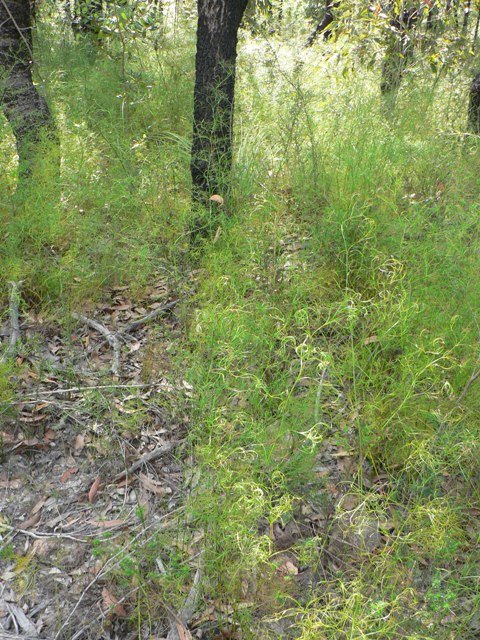
Grandfather's Beard (Caustis flexuosa, Family: Cyperaceae) is youthfully green and rampant now in this sandstone / kaolin forest in southern New South Wales, Australia.

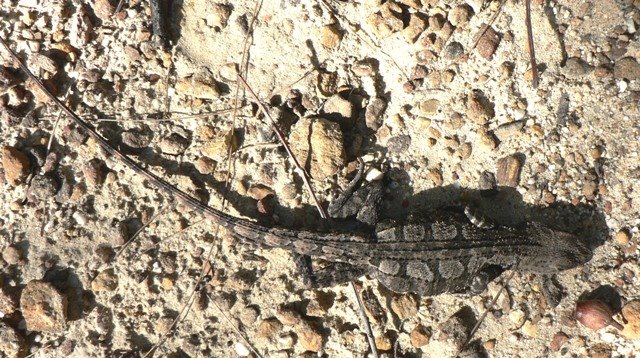
On a path, a dragon lizard basks. I think this is a Tympanocryptis diemensis, commonly called a mountain dragon.
and closer:Here's a picture taken of another lizard, trustworthily labelled T. diemensis by a more herpetologically aware photographer, so you can compare the two as well.

Moments away from above sunbather, and 500 metres further along the path:


Here and now it's easy to compare these two, but if this were a crime scene, what would memory have confidently declared?

As to whether dragon #2 is also a T. diemensis, I don't know, and am not going to assume. And does it matter, really, if I cannot tell you anything else about them? I came upon a female dragon once. She looked much like these—not basking, but laying eggs in a hole in the middle of the sunwarmed path. She was a type of dragon lizard, but Australia sports dragons in 60 flavours, not to mention an unparalleled variety of other lizards, many of whom have names longer than what's known about their lives.

29 October 2006

An outstanding book about insects by Bert Brunet


Australian Insects: A Natural History is an outstanding book by one of the greats in the history of great naturalists: Bert Brunet. This is not another coffee table picturebook with no real heart, but an exceptional production. The well-written, informative text (about much more than particular insects' lives) exudes patient observation, insatiable curiosity, and a wish to share the joy of discovery, even to the point of giving photography advice. The layout is clean and easy to access. The choice of insects shown is a pleasure whether they are newcomers to your greymatter bank, or already favourites such as the wattle-pig weevil is to me, and the breathtakingly beautiful greengrocer cicada is to many.

Although the cover photo is not by Bert Brunet, every one of the best pictures in this extraordinary book is. The key to the portraits' quality is his philosophy that one should see them alive, in their environment, doing what they do. Hoo-bloody-ray!

For an example, a female mottled cup moth (Doratifera vulnerans) is shown, freshly emerged from its artpiece of a cocoon (and the moth looks rather Louis xiv-ishly hirsute) across the page from a jawstretcher of a caterpillar of same, captioned in part: "The brightly coloured larva resembles a sea anemone, and is armed with expansible tufts of sharp stinging spines (setae), which the caterpillar is not shy to use if handled. These give a painful sting to the assailant."
His caterpillars pictures alone are worth the price of the book, if you only want to gawk.

Australian Insects: A Natural History by Bert Brunet gets my highest-level recommendation, no matter where you live or how young or old, ignorant or knowledgeable you are. (And no, I don't know Bert Brunet or anyone associated with this book.)

Two listings that I found for it:

Australia: The Map Market

UK: NHBS Environment Bookstore

Finally, I was very pleased to see that The Insectarium of Victoria library lists this book just above another of my favourites: Life Stories of Australian Insects by Mabel N. Brewster, Agnes A. Brewster, and Naomi Crouch, published in 1946, for schoolchildren—and school might be worth going to if . . . (but that is another subject).

Scented Fire

He rang his mother
from another continent and
reported that he had married the girl he'd been telling her all about.

And his mother
gathered his things
(only a little mouse-eaten)
from his shrine of a room . . .
his cricket bat,
his sectioned plans of robot elephants and biomechanical hands,
his sport awards and academic commendations and
outgrown shoes,
his tiny (though boggly on him then) first pair of spectacles . . .
And she found every picture of him from
his auspicious first day, on:
and burnt them
praying for the dead.

And when the money
he sent home the next week
was more than it had ever been before
his mother found it impossible not
to ask, when he rang as always
on the first day of the month:
"You have another job?"

"No," he chuckled,
and chucked Emily in
the ribs, and they giggled
through their faces
but not their mouths
while he explained:
"It was Emily"
(such a strange and ugly name)
"who made me do it."

And when,
the next year,
he and Emily
returned to his family home,
the smells of too much food
ran out to the street to greet them.

And soon the room of Emily's husband
rustled with the sound of mice, but
it was just a man and his wife
missing his childhood.

25 October 2006

Consider the quince in hot weather


Quince trees are so generous that every year I throw many fruits into the freezer whole, which means exactly that—no fussy stuff.

Continuing with Nothing Fussy:
The other day I pulled out enough quinces to cover the bottom of a big pot, let them thaw in it, covered them with water and simmered till they were quite tender, then let them sit in the pot for two days in the fridge. The liquor is thick and delicious, more refreshing than, but otherwise like an unfiltered apple juice.

You might wonder how much sugar to use. My personal answer is: 0. Freezing quinces makes them taste sweeter when they are defrosted; and when you don't add sugar, you can taste the quince as quince much more than you can when you add sweeteners. I'm not anti-sweeteners, by the way, and love eating good preserves straight from a glass, or with a piece of cheese.

But back to these quinces. They are good cold or at room temperature, but I refroze some of these stewed quinces with their liquor for the next hot day, which was only days ago. Eating them half frozen, and drinking that cold cold liquor made me almost long for the next hot day.

To really bring out their sweetness, a squeeze of fresh lemon is superb (to my taste, that is).

23 October 2006

A pellet of dung beetles

Spring!

The paddocks are holey with the work of dung beetles,
thus the paddocks are walked by black and white magpies whose songs are ethereal but whose great bills are pointed toward the earth.

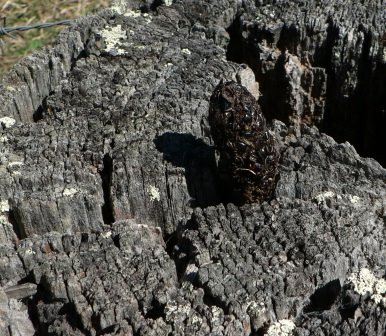
So . . . furthermorely thus and aftermore, the Dung Beetle takes another turn in the cycle of recycling, emerging glittering as ever atop this fencepost


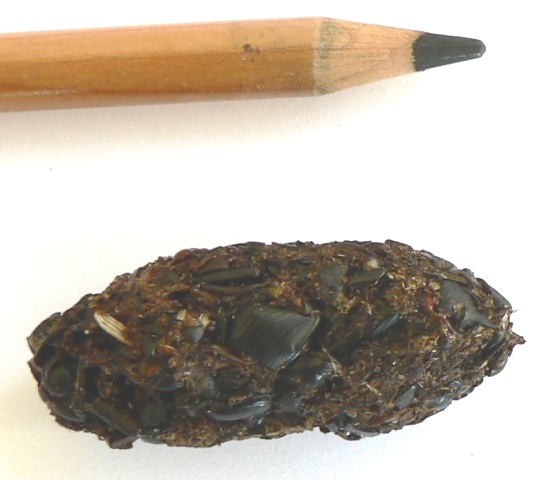
as a magpie's regurgitation pellet.
The pellet was removed temporarily,

then placed back where it was found.

The next day it was lost to these prying eyes.

The pellet was the size and shine of a mulberry, and smelt of magpie.

(I rather think that if a magpie wrote [noting that they would not all write in the same style any more than we do, but still . . .] the style would be florid, charming, intelligent and untrustworthy; but a dung beetle's prose would be clean, simple and as true as a great haiku.)